Why Cowboys Starch Their Jeans (and Why Tulsa Still Does It the Old Way)
Walk into any rodeo, ranch supply store, or country dance hall in Oklahoma and you will see it right away: jeans so crisp they look like they could stand up in the corner by themselves, with a crease down each leg sharp enough to slice daylight. That is cowboy heavy starch — one of the oldest traditions in western wear, and one DeHoney’s Cleaners has been part of since 1921.
So why do cowboys starch their jeans? The honest answer is part practical, part pride, and part habit that earned its keep a long time ago.
It Started as Work Gear, Not Fashion
On a ranch, denim takes a beating — brush, burrs, dust, grease, and long hours in the saddle or on a tractor. Heavy starch changes how denim handles all of it:
- Dirt sits on the surface. Starch seals the face of the fabric, so dust and grime rest on top instead of grinding into the fibers. At the end of the day it brushes off, and the jeans come cleaner in the wash.
- Stiff denim resists snags. A starched leg slides past brush and wire instead of catching on it the way soft denim does.
- The crease holds the shape. Starched jeans keep their form through a full day of work instead of bagging out by noon.
In other words, starch was never about vanity. It was about making a pair of jeans last longer and work harder — and then it happened to look sharp doing it.
The Look Became the Standard
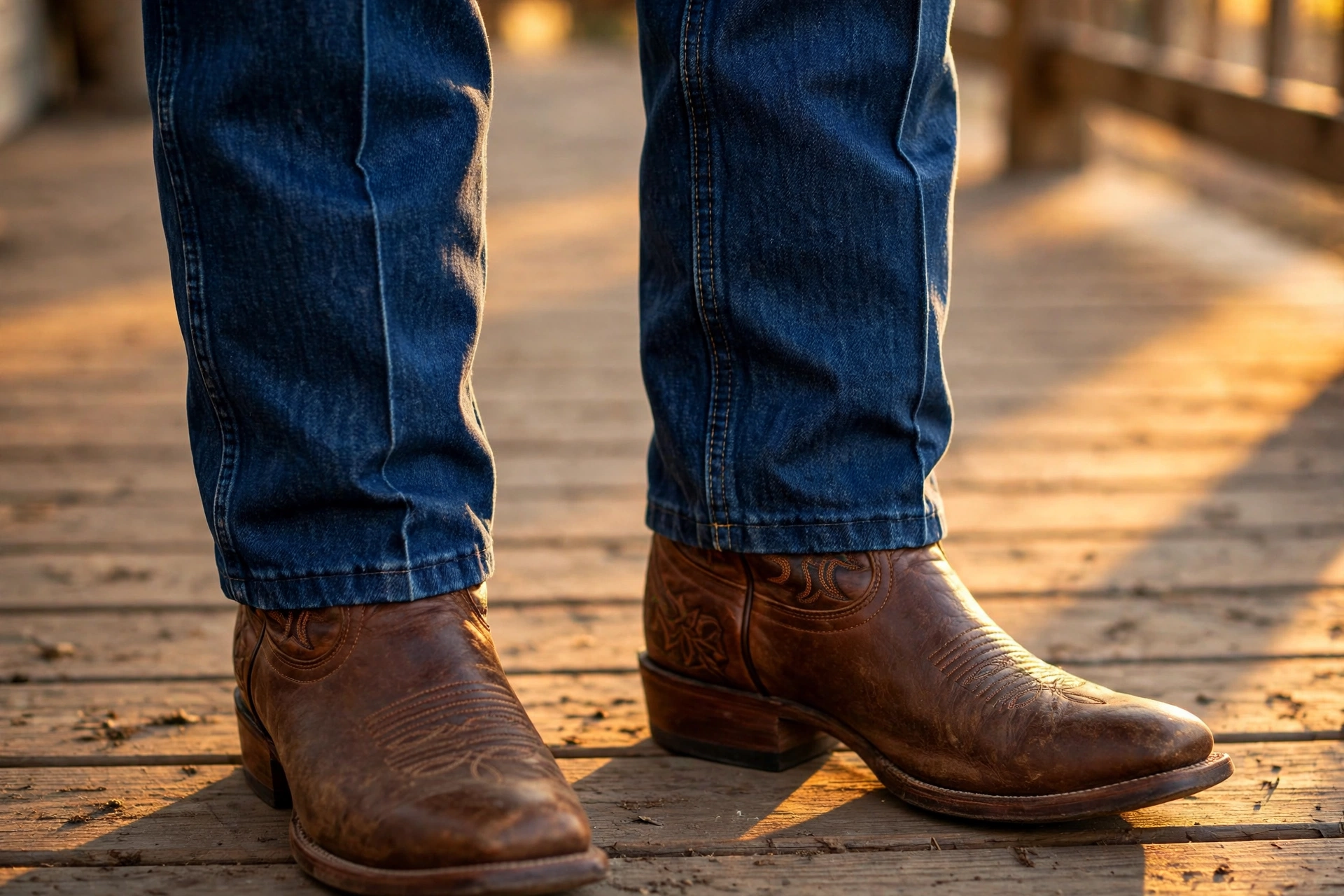
Somewhere along the way, the practical finish became the expected one. A cowboy in crisp, creased jeans and a starched western shirt looks ready — for the arena, for church, for the dance floor. Judges at the rodeo may not score your crease, but everybody notices it. Around Tulsa, a pair of jeans that can nearly stand up on its own is not showing off. It is just dressed.
Laundered-In Starch vs. the Spray Can
There are two ways to starch jeans, and they are not the same thing. Spray starch from a can coats the surface while you iron; it smells nice, adds a little stiffness, and gives up within the hour. Laundered-in starch — the kind a professional cleaner uses — goes into the wash itself, works through the denim, and is then baked in with a hot press that sets the crease. That is the finish that lasts all day and holds its crease wear after wear.
At DeHoney’s, every pair is washed clean first (starch over dirt just seals the dirt in), starched to the level you ask for — light, medium, heavy, or extra heavy — pressed with a straight crease, and finished by hand before it is hung. It is the same routine this shop has followed at 1427 S Harvard Ave for over a hundred years, because it works.
Choosing Your Level
- Light — a little body, a soft crease, everyday comfort.
- Medium — defined crease, noticeable crispness. The everyday favorite.
- Heavy — the classic cowboy starch: stiff, smooth, sharp.
- Extra heavy — the full stand-in-the-corner finish.
If you have never had your jeans starched, start at medium. You will know within one wearing whether you are a medium person or a heavy person — most folks who try heavy never go back.
A Tradition Worth Keeping
Work jeans, rodeo jeans, church jeans, dancing jeans — in Oklahoma they are often the same pair, and they are expected to be crisp. When you are ready for yours, bring them by DeHoney’s at 1427 S Harvard Ave in Tulsa, Monday–Friday, 7 AM–6 PM, or call (918) 744-1166. We will starch them the way we have since 1921 — and the way your grandfather would have insisted on.
Read next: What hand finishing really means — and why every DeHoney’s garment gets it.